

Surjit Singh Flora is a veteran journalist and freelance writer based in Brampton, Canada.
Canada’s economy runs on long distances, hard winters, and roads that have to work in all of it. Cities sit far apart, freight often crosses several provinces, and many communities depend on a single highway for daily supply.
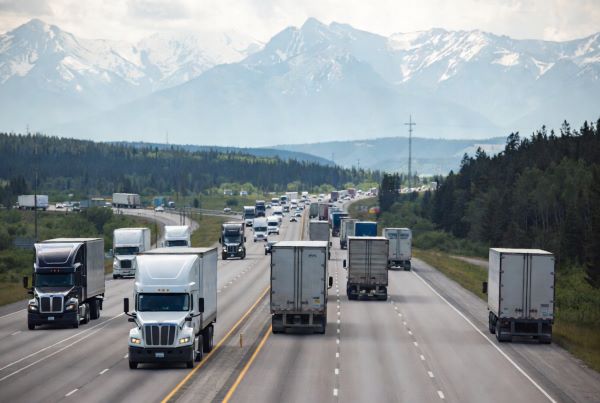
That is why trucks are more than vehicles on the road. They are moving infrastructure, carrying the freight that keeps store shelves stocked, factories supplied, farms connected, and cross-border trade flowing. The trucking industry adds more than $96 billion to GDP, but its real weight shows up in supply chains, in the businesses that depend on timely deliveries, and in the people behind the wheel.
When freight stops, the delay shows up in stores, factories, and kitchens within days.
Canada’s geography makes trucking the default choice for a huge share of domestic freight. The country is vast, but the population is clustered near the southern border and spread across a few major corridors. That leaves long stretches where rail terminals, ports, and airports are too far from the final customer to do the whole job.
Rail moves heavy bulk well. Ships move large volumes across oceans. Air freight handles urgent, high-value cargo. Still, none of those modes can match trucks for door-to-door delivery, especially when freight has to move between warehouses, stores, farms, job sites, and small towns. Trucks fill the gap because they can reach where the other modes stop.
Harsh weather adds another layer. Snow, ice, and freeze-thaw cycles can slow every mode of transport, yet road freight keeps daily commerce moving. The logic is simple, Canada needs a transport system that can touch nearly every part of the economy, and trucks do that better than any other mode.
The Trans-Canada Highway is more than a famous route. It is part of the country’s freight spine, along with major corridors such as Highway 401 in Ontario and other busy interprovincial routes. These roads connect western producers to central and eastern markets, then push goods onward to cities, suburbs, and rural stores.
A pallet of canned food may leave a warehouse in Alberta, pass through a regional hub, then finish its trip in a store outside Montreal or Halifax. That last stretch matters as much as the first. Factories, supermarkets, and farm supply stores all need trucks to complete the move.
This is where trucking becomes the quiet fix for geography. Rail can bring freight close, but trucks finish the trip. Without that final leg, many supply chains would break at the warehouse door.
Canada’s truckers are tied to the United States every day. Food, auto parts, machinery, building materials, and retail goods move back and forth across the border in a steady flow. The two economies are so linked that a delay in one corridor can hit both sides.
Many Canadian carriers depend on U.S. routes for a large share of their work. That makes border crossings more than checkpoints. They are pressure points where customs delays, labor shortages, weather, or paperwork can slow freight and raise costs.
The auto sector shows this connection clearly. A part made in Ontario may cross into Michigan, return as part of a larger assembly, then move again by truck to a dealership or warehouse. That kind of motion is common, which is why Canadian trucking cannot be separated from North American trade.
Trucks move a wider mix of cargo than many people realize. Food, medicine, lumber, vehicles, equipment, and consumer goods all spend time on road freight. Some loads are routine. Others need tight timing and cold storage. In either case, a truck is the link that keeps the rest of the chain working.
The country’s stores and job sites rarely run on one type of freight alone. A grocery chain needs fresh produce. A pharmacy needs medicines and medical supplies. A builder needs drywall, steel, insulation, and tools. Retailers need constant replenishment, because empty shelves cost sales quickly.
That is why trucking is not a background service. It is part of everyday life, and it touches industries that seem far apart on the surface.
Refrigerated trucking keeps cold-chain freight safe while it moves. That includes dairy, meat, frozen foods, and fresh produce. If a load sits too long, the loss can be immediate. Grocery stores, restaurants, and food processors all feel the delay.
Medicine works on a shorter fuse. Hospitals, clinics, and pharmacies depend on frequent deliveries of supplies and drugs that cannot wait for a slower mode of transport. A missed shipment can force staff to reshuffle inventory or delay care.
This is where road freight proves its value in plain terms. A truck can leave a distribution center, cross a province, and arrive at a dock or back room without a handoff to another mode. That speed and flexibility keep essential goods moving when the schedule is tight.
Factories need parts on time or production lines slow down. Builders need materials on site or crews stand idle. Retailers need stock moving in and out because customer demand changes fast. In each case, the truck is the link that keeps planning from turning into a stoppage.
One late delivery can ripple across several sectors. A missing component may delay an assembly line. A late lumber load can push a construction crew off schedule. A delayed retail shipment can leave a store with gaps it cannot fill before the weekend rush.
The result is simple. Road freight keeps the economy from stalling at the point where goods have to meet people.
The trucking industry is not a single kind of business. It includes small family-owned fleets, owner-operators, national carriers, and cross-border firms that run thousands of miles each week. Some own one truck. Others manage large trailer pools, dispatch teams, and dense maintenance schedules.
That range matters because the economics are different at every level. A one-truck owner may feel every fuel spike and repair bill at once. A large carrier can spread risk across more loads, but it also carries bigger overhead and more rules. In both cases, profit depends on keeping trucks moving.
The job also reaches far beyond the cab. Mechanics, dispatchers, safety staff, warehouse crews, and office workers keep freight moving long after the engine stops.
A small fleet often begins with one truck and one driver. The owner handles the load, the schedule, the books, and the repairs. That setup can build wealth over time, but it leaves little room for error. One breakdown can erase a week of income.
Large carriers run differently. They invest in dispatch systems, route planning, and maintenance programs. They also have more bargaining power with shippers, which can help smooth out thin margins. Still, their scale does not erase the pressure of fuel prices, insurance, and regulatory compliance.
Between those two models sits a wide middle ground. Many firms own several trucks, hire a handful of drivers, and grow only when cash flow allows it. The business is practical, hard-edged, and sensitive to any change in cost.
A truck on the road depends on a chain of labor behind it. Mechanics keep engines safe and running. Dispatchers line up loads and schedules. Warehouse staff load trailers, scan freight, and send it out again. Safety teams watch records, training, and compliance.
Many drivers also come to trucking later in life. Some are retired military. Others want steady work after a first career. The industry draws people who can handle long hours and solitary work, but it also needs support at home and in the yard.
That wider workforce matters because freight does not move by itself. The cab is only the most visible part of the system.
South Asian Canadian entrepreneurs and drivers have played a major role in trucking, especially in British Columbia, Alberta, and Ontario. Many entered the industry as drivers, bought a single truck, then added more as the business grew. That path has shaped a large share of the sector’s small and mid-sized fleets.
Immigrant communities have also filled jobs that other sectors often overlook. They brought language, trade knowledge, and family labor into an industry that rewards persistence. Over time, many of those businesses expanded into larger carriers and brokerage firms.
The story is not one of symbolism. It is one of ownership, work, and long hours on the road.
Trucking keeps Canada moving, but it does so on tight margins. Fuel, insurance, tires, repairs, permits, and compliance costs can rise faster than freight rates. For smaller fleets, that pressure lands hard and fast.
New heavy-duty trucks also cost a great deal to buy. A new rig can run well into six figures, and that is before financing, trailers, and the equipment needed to keep it compliant. After purchase, the bill keeps growing through maintenance and downtime.
The math is unforgiving. A truck that sits in a repair bay earns nothing, yet the loan, insurance, and overhead still come due.
Diesel prices and insurance premiums are squeezing margins
Diesel prices move fast, and carriers feel every shift. When fuel climbs, profit can disappear on a load that looked fine on paper a week earlier. Insurance works the same way, because premiums keep rising and often hit smaller operators hardest.
That leaves carriers with a hard choice. They can try to raise rates, absorb the loss, or cut back on weaker lanes. None of those options is clean. In a market where customers expect speed and low prices, the burden usually lands on the carrier first.
The result is a business that looks busy but feels fragile.
A heavy-duty truck is a major capital expense. Financing can stretch for years, and the unit still needs tires, oil changes, brake work, inspections, and repairs. Modern emissions systems add more cost, and so do permits and compliance records.
Downtime is another tax. When a truck is off the road, the company loses revenue but keeps paying fixed costs. A delay in parts or a missed maintenance window can hurt a small fleet for weeks.
That is why trucking can look like a busy industry while still producing thin returns.
Canada’s trucking future is being shaped by labor pressure, policy, and technology at the same time. Driver shortages remain a concern, and Canada’s growing use of temporary foreign worker permits for truck drivers has raised questions across the transport industry. Unions have pushed back on any sign that employers are becoming too dependent on migrant labour.
At the same time, the job itself is hard to keep filled. Long-haul schedules strain family life, and that affects retention as much as pay does. Some drivers leave after a few years. Others stay, but only because the work fits a certain stage of life.
The industry also has to adjust to electric trucks, automation, and changing freight patterns. Those shifts will not remove trucking’s place in the economy. They will change how it looks and where the hardest jobs sit.
Long-haul drivers spend days, sometimes weeks, away from home. Birthdays, recitals, anniversaries, holidays, and kids’ events get missed. A broken water heater at home can become a phone call that lands while the driver is hundreds of miles away.
That distance shapes retention. Some people can handle it for a season. Others cannot. Even when pay is fair, the social cost is real, and it pushes many experienced drivers out of the field.
Communication with family helps, but it does not erase the strain. The road has its own clock, and home life has to fit around it.
Technology may change trucking, but it will not remove its importance
Electric trucks will likely spread first on regional routes and shorter hauls where charging is easier to manage. Long-distance work is harder because range, battery weight, and charging time still limit flexibility. Autonomous trucks may also appear in limited corridors, but they will not cover every route or every weather condition.
Road freight will remain necessary because Canada still needs goods moved to places that rail and sea cannot reach on schedule. Technology may change the mix of jobs, the cost structure, and the kind of equipment fleets buy. It will not remove the need for trucks on Canadian roads.
Canada’s economy depends on trucks every day, and that dependence reaches far beyond the highway shoulder. The industry moves food, medicine, building materials, factory parts, and cross-border freight that keeps stores open and work sites active.
The system is powerful, but it is also fragile. Geography, labor shortages, fuel costs, insurance, and changing technology all shape how well it holds together. That is why the trucks on Canada’s roads are not just traffic. They are one of the clearest signs of how the country keeps its shelves full, its factories supplied, and its homes connected to the next delivery.




From Border to Backdoor: Why Trucking Remains Canada’s Indispensable Industry added by RTET on
View all posts by RTET →